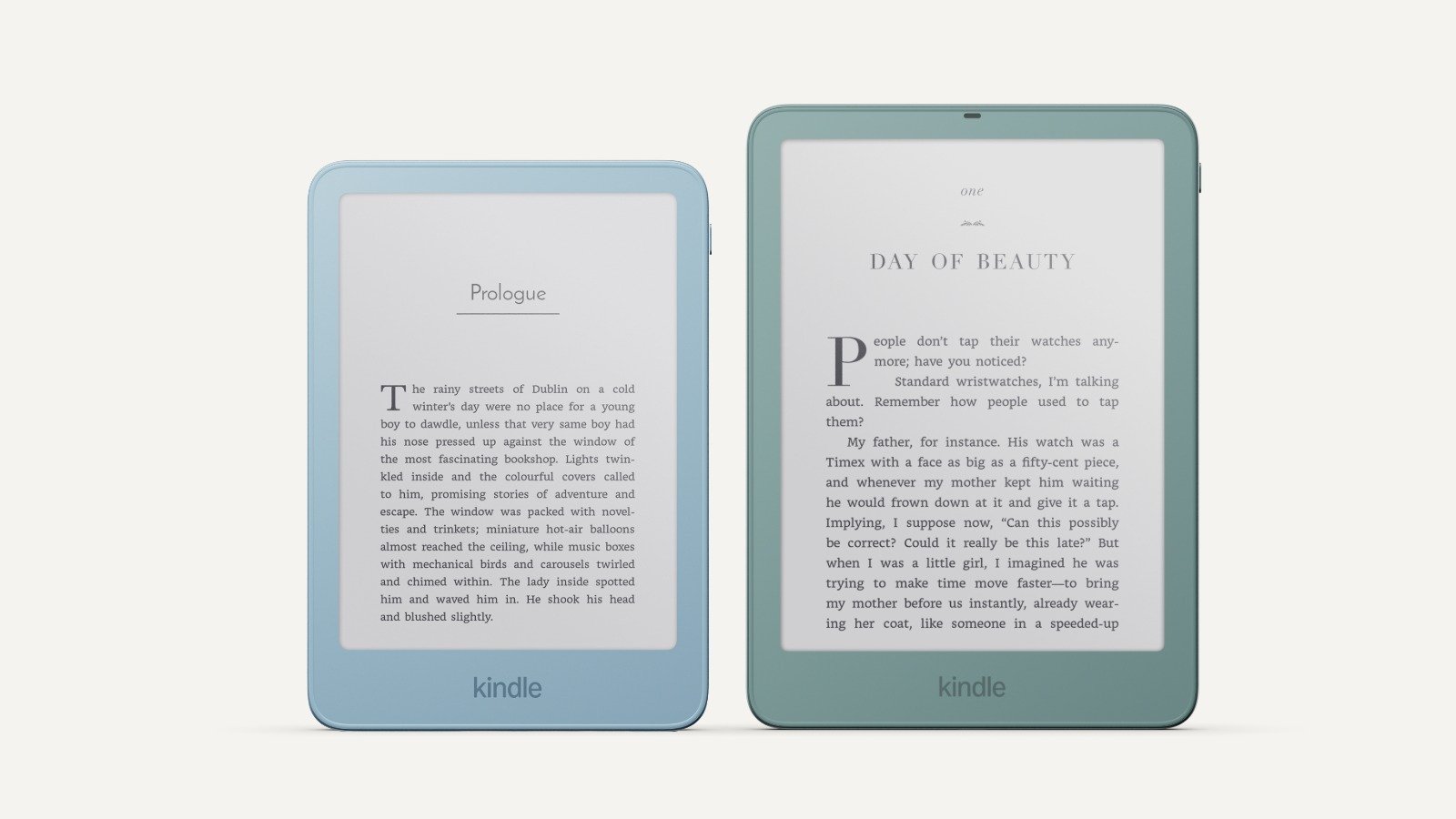
Anyone who has used an older entry-level Kindle knows the small ridge where the screen sits below the frame. It collects dust, boxes in the page, and quietly signals that this is the budget model. On October 1, 2026, Amazon removed that ridge.
The company announced a redesigned Kindle lineup: a new 6-inch Kindle in plastic and aluminum versions, a new Kindle Paperwhite and Paperwhite Signature Edition, and refreshed Colorsoft models. Every model gets a flush front and a reworked display assembly. For anyone tracking the new Kindle 2026 lineup, the most visible changes are physical rather than numerical, which makes this launch a useful indicator of where mainstream e-reader design may be heading.
The new Kindle family, in brief
The basic Kindle and its aluminum sibling went on sale the day of the announcement. The Paperwhite and Colorsoft models are available for preorder, with GeekWire and TechRadar reporting an October 28 ship date. Prices match the levels Amazon set after its August increase, which the company attributed to memory costs.
| Model | Key design change | US starting price | Availability |
|---|---|---|---|
| Kindle (6-inch) | Flush front, color-matched front finish, plastic housing | $149.99 (16 GB, lock-screen ads) | On sale October 1 |
| Kindle (aluminum) | Same design with an aluminum back | $189.99 (32 GB, no ads) | On sale October 1 |
| Kindle Paperwhite | Thinner, lighter 7-inch model with new display stack | $199.99 (16 GB, lock-screen ads) | Preorder; ships October 28 |
| Paperwhite Signature Edition | Aluminum rear housing, auto-adjusting light, pogo-pin dock charging | $249.99 (32 GB, no ads) | Preorder; ships October 28 |
| Kindle Colorsoft / Signature Edition | Redesigned color display, edge-to-edge front color | $289.99 / $319.99 | Preorder; ships October 28 |
Check current Kindle models and availability on Amazon.
The 6-inch Kindle gets a more ambitious design
Amazon calls the new basic model its most pocket-sized Kindle yet. TechSpot reports it measures 6.8mm thick and weighs 140 grams, roughly a millimeter and 18 grams less than its predecessor. That matters because a small dedicated reader earns its place by disappearing into a jacket pocket or a small bag, which remains the core appeal of compact e-readers.
The bigger shift is positioning. For the first time, the entry-level Kindle has a premium tier. The aluminum version costs $40 more, but that money also doubles storage to 32 GB and, according to TechSpot, removes lock-screen ads. It is not the lighter option: Engadget reports it weighs about 20 grams more than the plastic model.
Buyers should weigh the whole package rather than the material alone. The flush front is mainly a design and cleaning change; Amazon has not shown that it alters how text looks.
The display stack matters as much as the panel
An e-reader screen is more than its E Ink film. The finished assembly, often called the display stack, combines the E Ink layer with the front light and light guide, the touch sensor, and a protective cover, all bonded together. For background, see how E Ink displays work.
What Amazon documents: a “reverse stack” construction that it calls a first for e-readers, although it has not publicly detailed what is reversed. For the 6-inch Kindle, Amazon says the flush front required rethinking how the display, front light, and touch layers are assembled. The Paperwhite uses an oxide thin-film transistor backplane. The Colorsoft adds nitride LEDs, a light guide with micro-deflectors, and a thin optical coating. Kevin Keith told TechRadar that the colored front edge uses a black mask underneath to absorb stray front light.
What Amazon claims: the Paperwhite has the highest contrast ratio of any Paperwhite, and the Colorsoft offers improved clarity.
What needs testing: whether those changes are visible. Good e-Reader lists the Paperwhite at 300 ppi, the same density as before, yet identical resolution does not guarantee an identical screen. Equally, a new stack does not guarantee a visible improvement.
Materials and controls bring the focus back to handling
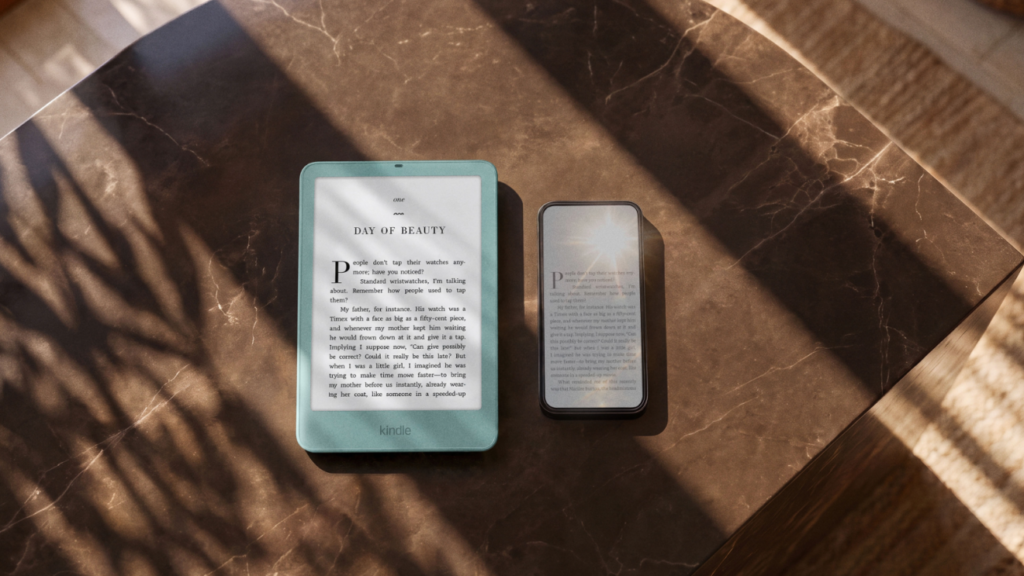
Plastic remains the default. Engadget’s hands-on noted that the soft-touch paint on one purple unit felt slightly rough, though Amazon said the finish is similar to the previous generation’s. The aluminum housings are stamped rather than fully machined, a process Amazon design chief Chris Green told TechRadar uses about 60 percent less material.
Thickness gains beyond the basic model are modest. TechSpot reports the Paperwhite and Colorsoft at 6.8mm and 204 grams. Thinner is not automatically more comfortable, though. Grip texture, balance, and cover thickness affect long sessions as much as millimeters do.
The most practical change may be the smallest. Every new model moves the power button from the bottom edge to the right side near the top. Green told TechRadar the bottom location was originally the lowest-cost spot, and that readers complained about pressing it when propping the device on a lap or a treadmill. The new position may reduce accidental presses, although a side button could introduce its own grip trade-offs. The Signature Editions also add an accelerometer for automatic rotation, including landscape reading.
What the redesign still needs to prove
Einkopedia has not tested these devices, and announcement material cannot settle the questions that matter most during actual reading.
| Announced change | Potential reader benefit | What remains untested |
|---|---|---|
| New display stack and higher claimed contrast | Crisper, darker text | Visible difference beside the previous model; reflections from the new surface |
| 30% faster book opening on the 6-inch Kindle (vs. previous model) | Less waiting when switching books | Whether ordinary page turns and menus feel faster |
| Thinner bodies and side power button | Easier one-handed holding, fewer accidental sleeps | Comfort over long sessions, and how much a cover adds back |
What this means for e-reader design
Amazon’s 2026 Kindle lineup suggests that mainstream e-reader differentiation increasingly includes construction and handling alongside display performance. The panel still matters, but much of this year’s work happened around it: in the bonding, lighting, enclosure, and controls.
This is one manufacturer’s launch, not proof of an industry-wide consensus. Amazon’s scale does make its choices influential, however, and its reasoning holds for any device people hold for hours at a time. Small decisions about button placement, weight distribution, and surface finish shape every session in a way that a spec sheet cannot capture. Readers comparing dedicated readers with larger note-taking devices can start with what to consider before buying an E Ink device.